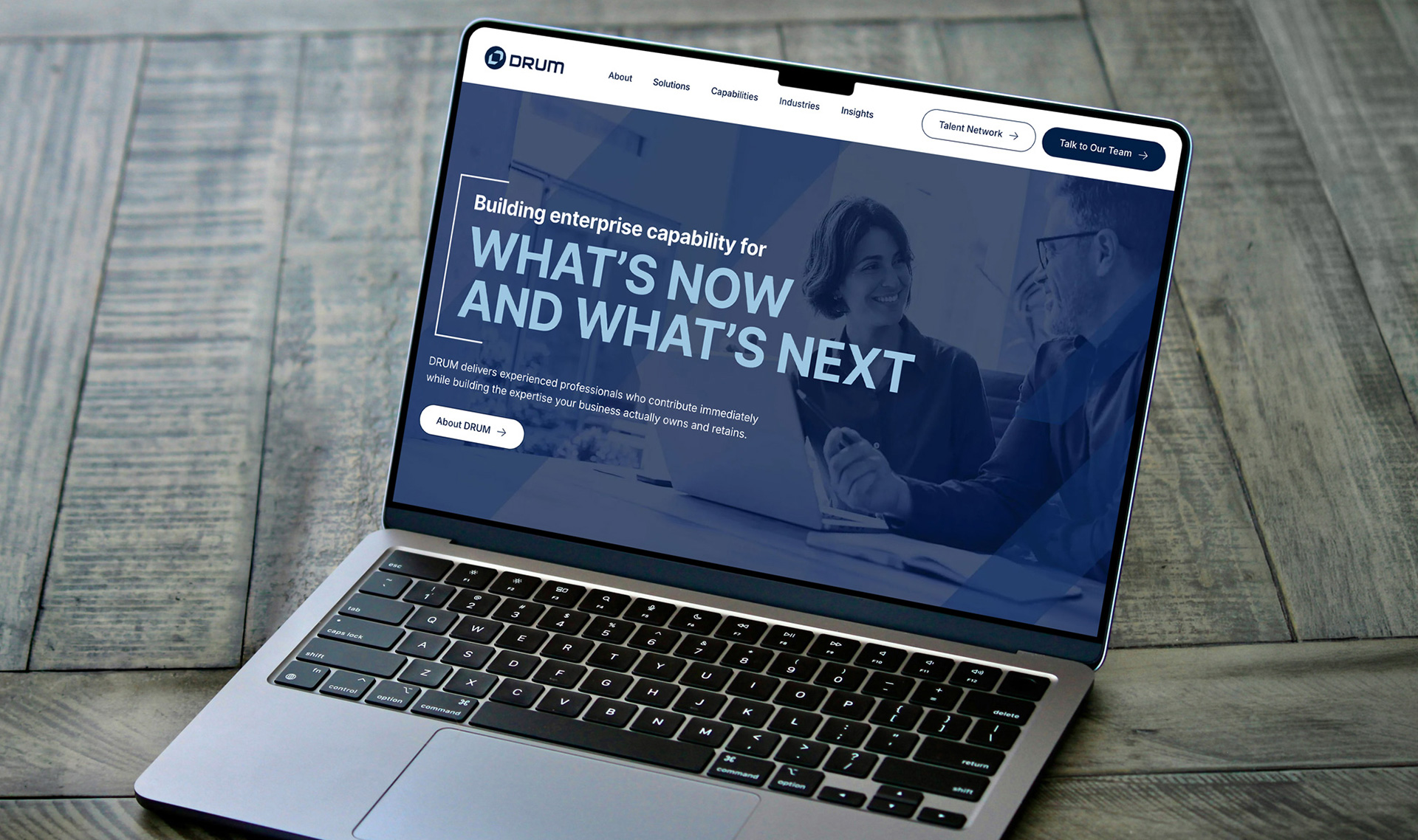
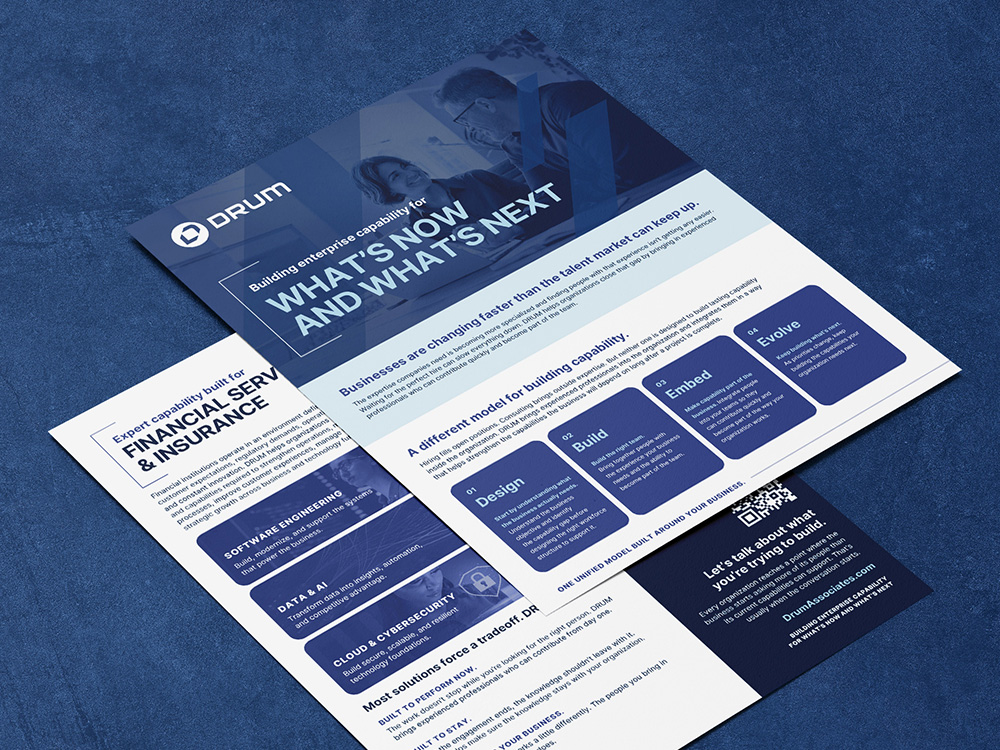
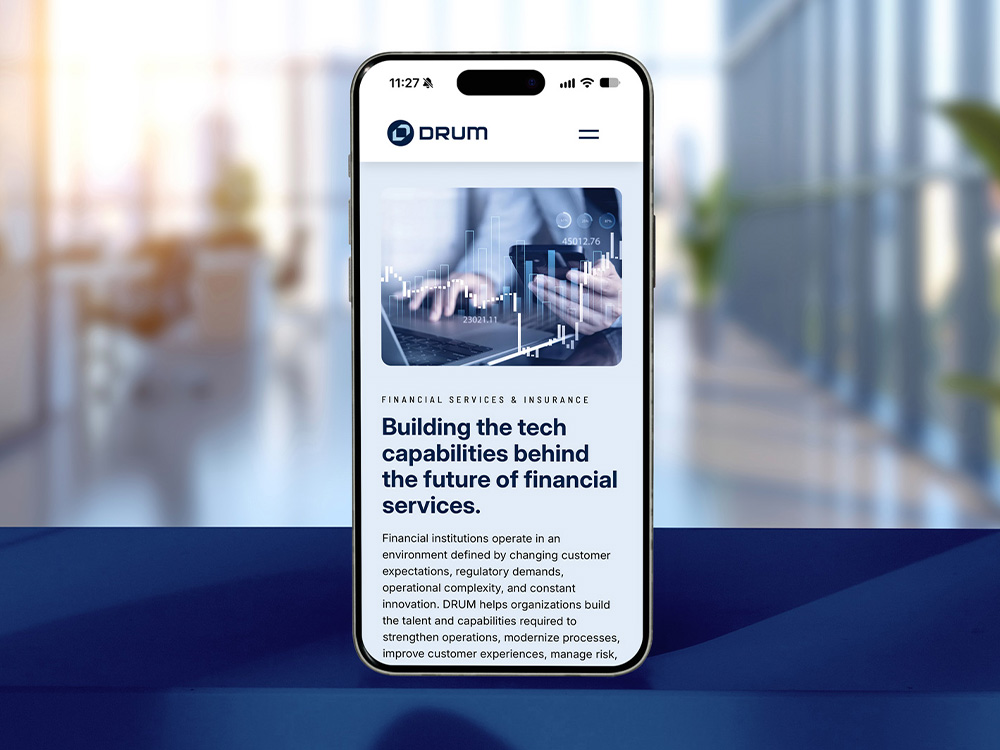
How Splendor helped DRUM establish a stronger market position and prepare for its next stage of growth.
The talent marketplace is changing faster than many companies can keep up with. Technology is creating new demands for expertise, while the people with the right combination of technical skills and industry experience are becoming harder to find. Even when companies find the talent they need, retaining that knowledge and developing it within the organization presents another challenge.
For DRUM, these conditions presented an opportunity to bring a different approach to the market.
DRUM had an established history in talent solutions and a business model that was evolving to address the challenges facing enterprise organizations. The opportunity was compelling, but the company needed a clearer way to communicate what made its approach different and why it mattered to prospective clients.
Splendor was brought in to help define that position and carry it through a comprehensive brand and marketing engagement.
Understanding the Business Before Defining the Brand
Our work began with a close look at DRUM’s business, its competitive environment and the challenges its clients were trying to solve.
One of the recurring problems in the talent marketplace is the growing disconnect between the expertise companies need and the experience available to them. Businesses are looking for people who understand emerging technologies but also have enough practical experience to work effectively inside complex organizations. In newer disciplines, that combination is especially difficult to find.
Companies have traditionally addressed talent shortages through hiring, consulting or outsourcing, but those approaches introduce their own complications. External resources bring valuable expertise, yet organizations still need to consider what happens to that knowledge when the engagement ends.
DRUM’s model addresses that concern by bringing experienced professionals into an organization, integrating them with existing teams and developing capabilities that become part of the business.
As we examined the offering, it became clear that DRUM had a more substantial story to tell than the language typically associated with talent solutions.
Establishing a Position DRUM Could Own
Talent solutions is a crowded category, and much of the language sounds remarkably similar. Nearly everyone promises access to qualified people and the flexibility to meet changing business needs.
Those are important considerations, but they don’t adequately explain DRUM’s approach or the value it creates.
Our positioning work focused on the connection between immediate talent needs and the longer-term challenge of building enterprise capability. That thinking led to a central brand idea:
Building Enterprise Capability for What’s Now and What’s Next.
The position gave DRUM a way to speak directly to the needs of enterprise decision-makers while establishing a broader understanding of its business.
It also provided the basis for a messaging architecture that explained how DRUM works, where it creates value and how its approach differs from conventional talent models.
With that foundation in place, we could begin translating the strategy into the way the company presented itself.
Giving the Business a Brand That Matched Its Ambition
DRUM’s evolving business required an identity that reflected the sophistication of its offering and the organizations it serves.
We developed a new visual identity and brand system informed by the positioning, giving DRUM a more distinctive presence in a category where many competitors look and sound alike.
The messaging work was equally important. DRUM needed to explain a business model that involves more than placing qualified professionals into open roles. Prospective clients needed to understand how the model works within their organizations and why developing internal capability matters.
That thinking carried directly into the website.
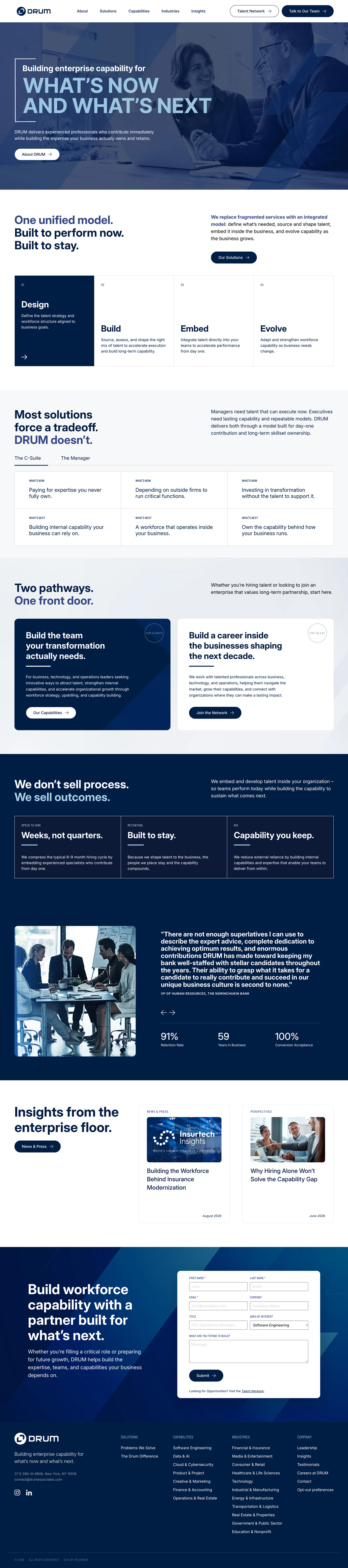
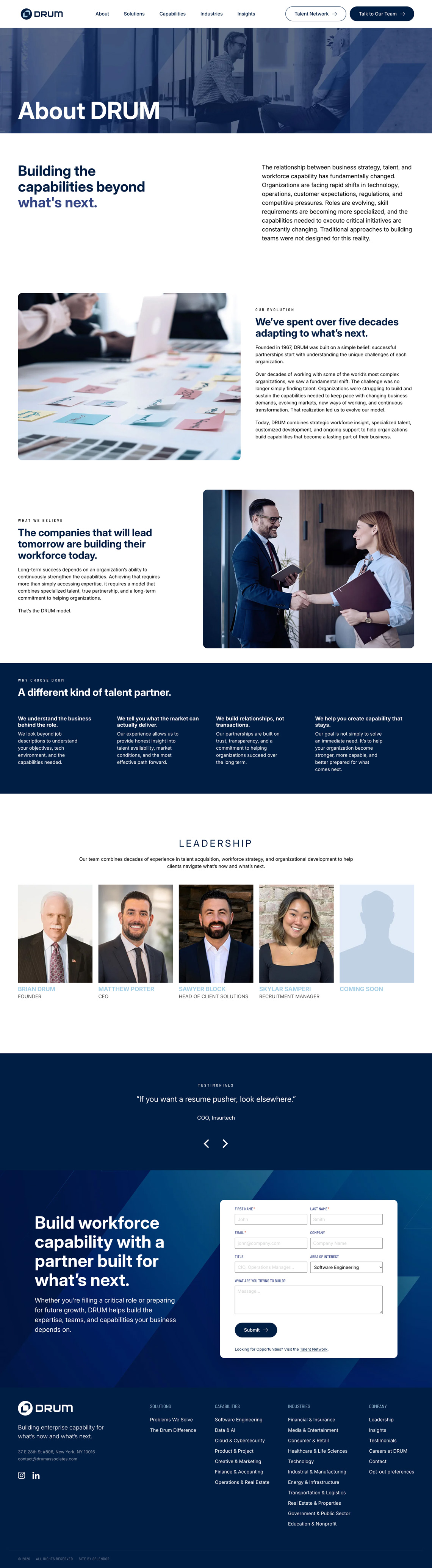
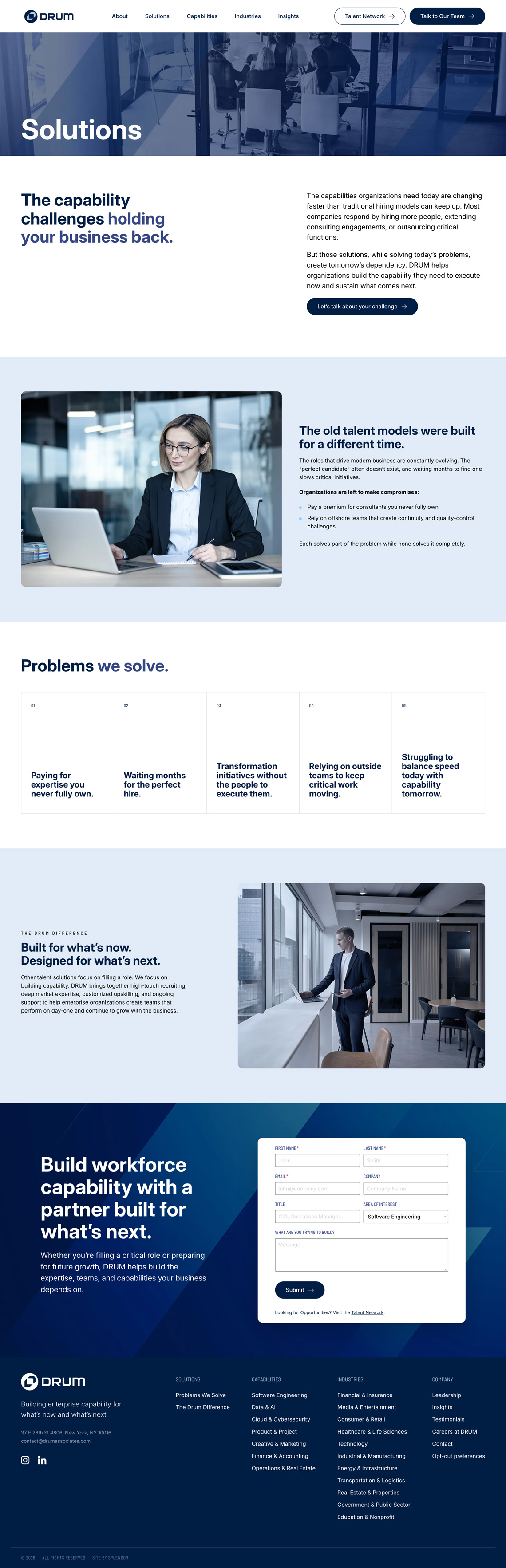
Making a Complex Offering Easier to Understand
For many prospective clients, the website would be their first meaningful introduction to DRUM’s approach.
We developed the site around the questions enterprise buyers are likely to have as they evaluate their talent challenges and consider alternative solutions.
The content connects those challenges to DRUM’s model, explaining how experienced professionals become integrated into an organization and contribute to building its internal capabilities.
The website also needed to support DRUM’s continued evolution. As the company expands its offering and addresses new market needs, the platform provides room for additional content and marketing activity without losing the clarity established through the positioning work.
Taking the Story to Market
With the brand and website in place, our work moved into ongoing marketing.
The campaigns we’re developing address issues DRUM’s prospective clients are already dealing with, including shortages of specialized talent and the difficulty of finding professionals who understand both technology and the businesses that depend on it.
One particularly relevant challenge involves emerging technologies. Companies frequently look for candidates with years of experience in disciplines that have only recently become important to their operations. In some cases, the ideal candidate simply doesn’t exist in the market.
That’s an opportunity for DRUM to introduce a different way of thinking about talent requirements and how organizations develop the expertise they need.
The marketing builds on the positioning established at the beginning of the engagement, connecting DRUM’s business model to problems enterprise decision-makers recognize in their own organizations.
Owning the Conversation Before the Conversion
The DRUM engagement gave us the opportunity to work across the full scope of the business’s market presence, beginning with strategy and continuing through brand development, website design and ongoing marketing.
Because the work began with a clear understanding of DRUM’s business and the market opportunity, the decisions made during positioning informed everything that followed.
It’s a good example of what we mean by owning the conversation before the conversion.
We helped DRUM establish what it wanted to become known for in the talent marketplace, then built the brand and marketing foundation to make that position meaningful to prospective clients.
As the talent marketplace continues to evolve, DRUM has a foundation that reflects the business it has become and the opportunities it’s preparing to pursue.